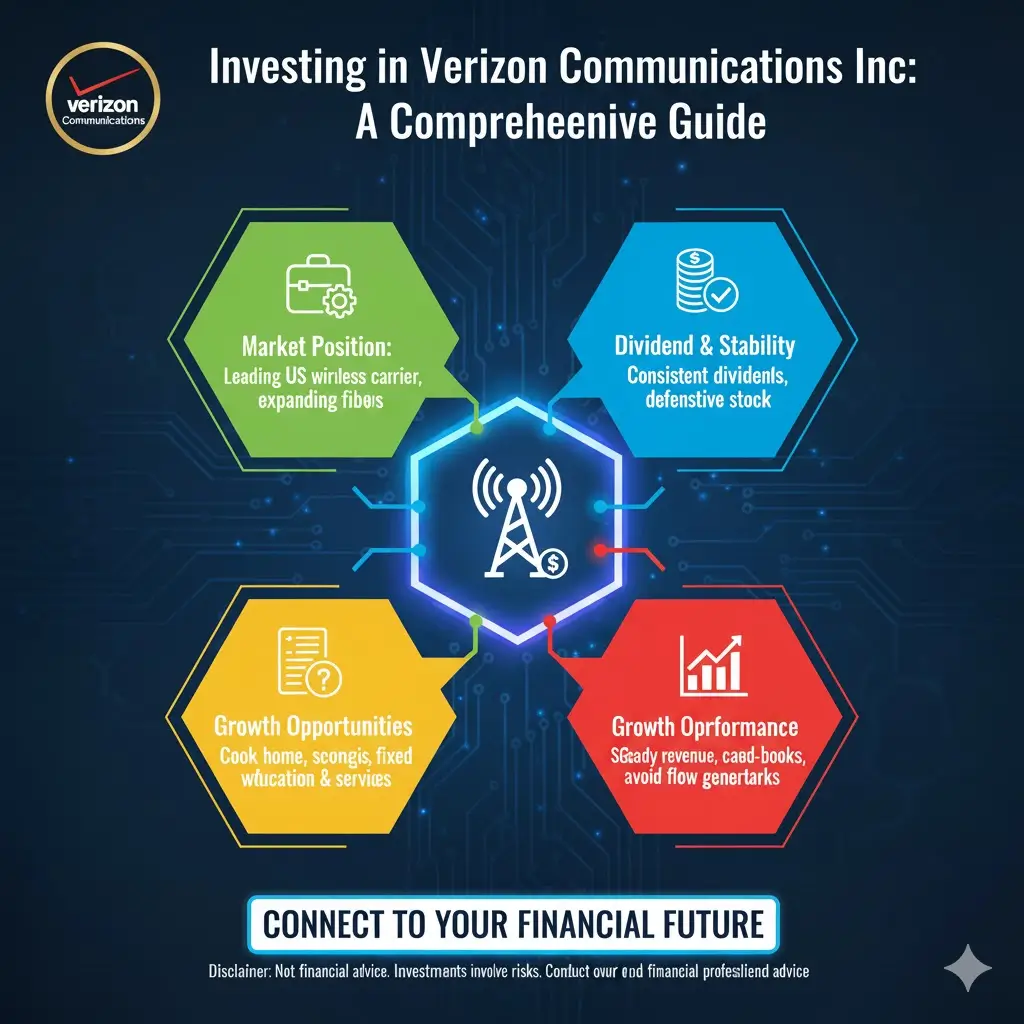

Investing in telecommunications giant Verizon Communications Inc. (VZ) often comes up in discussions about stable, dividend-paying stocks. As a dominant force in the U.S. telecom industry, Verizon offers a unique mix of reliable income and potential for future growth, making it an interesting prospect for many portfolios.
This guide provides a comprehensive analysis of Verizon’s market standing, financial health, growth opportunities, and inherent risks. By examining the company’s business segments, competitive landscape, and expert opinions, you will gain the insights needed to determine if a VZ investment aligns with your financial goals.
A Brief History of Verizon
Verizon’s roots trace back to the Bell System, which was broken up in 1984. One of the resulting “Baby Bells” was Bell Atlantic, which would later become a core part of Verizon. Through a series of major mergers and acquisitions, including the 2000 merger with GTE Corporation, Verizon was formed.
Key milestones in its history include the nationwide launch of its 4G LTE network, which set a new standard for mobile data, and strategic acquisitions like AOL and Yahoo’s core internet business to expand its digital media footprint. Today, Verizon is a global leader, known for its extensive network and its pioneering role in 5G technology.
Understanding Verizon’s Business Segments
Verizon operates through two primary business segments, each catering to a distinct market.
Verizon Consumer
This is the larger of the two segments and the one most people are familiar with. The Consumer segment provides wireless and wireline communication services to individual customers.
- Wireless Services: This includes a range of postpaid and prepaid mobile plans, offering voice, data, and messaging. It is Verizon’s primary revenue driver, supported by its reputation for network reliability.
- Wireline Services: This segment provides broadband internet (including Fios fiber), video, and voice services to residential customers.
Verizon Business
The Business segment serves a wide array of clients, from small businesses and startups to large multinational corporations and government agencies. It offers a comprehensive suite of solutions designed to enhance connectivity, security, and operational efficiency.
- Wireless and Wireline Connectivity: Offers robust communication services tailored for business needs.
- Networking and Security: Provides corporate networking solutions, managed network services, and advanced security to protect sensitive data.
- Internet of Things (IoT) and 5G Solutions: Delivers cutting-edge services for smart cities, fleet management, and other emerging technologies powered by its 5G network.
Verizon’s Financial Performance
A deep dive into Verizon’s financials reveals a picture of a stable, mature company with consistent performance.
Revenue and Profitability
Verizon has demonstrated steady revenue growth over the past decade, driven by its strong wireless subscriber base and strategic expansion into new service areas. In 2023, the company reported annual revenue of approximately $134 billion.
The company’s profitability remains healthy, with an operating margin often around 25%. This indicates efficient operations and strong cost management, allowing Verizon to generate substantial cash flow. For Q1 2024, Verizon reported a 3% increase in total operating revenue compared to the same period in the previous year, beating analysts’ expectations.
Debt and Capital Expenditures
Like most telecom companies, Verizon carries a significant debt load, largely due to massive investments in network infrastructure and spectrum acquisitions. As of late 2023, its total debt was around $150 billion. However, its debt-to-equity ratio is approximately 1.3, a manageable level for a company with its strong and predictable cash flow.
Verizon continues to invest heavily in its future. For 2024, the company plans $17.5-$18.5 billion in capital expenditures to further enhance its 5G and fiber networks.
Dividends and Customer Loyalty
Verizon is a favorite among income investors for its reliable dividend. As of Q2 2024, Verizon’s dividend yield is approximately 4.5%. The company has a long history of consistently increasing its dividend, showcasing its commitment to returning value to shareholders.
Customer loyalty is another strong financial indicator. Verizon’s postpaid phone churn rate was a low 0.7% in Q1 2024, suggesting customers are satisfied with the service and unlikely to switch providers. The company’s Net Promoter Score (NPS) of 35 further reinforces this positive customer sentiment.
Verizon’s Position in a Competitive Industry
The U.S. telecommunications market is famously competitive, dominated by three major players. Verizon holds a strong position with approximately 30% of the U.S. wireless market share.
Competitor Comparison: Verizon vs. AT&T, T-Mobile, and Comcast
- AT&T (T): A close competitor, AT&T has a similar market share but has diversified heavily into media with its WarnerMedia acquisition (which it later spun off). While Verizon has remained more focused on its core telecom business, AT&T’s strategy has led to different growth and debt profiles.
- T-Mobile (TMUS): Known for its aggressive “Un-carrier” marketing and competitive pricing, T-Mobile has seen rapid growth, especially after its merger with Sprint. It often challenges Verizon on price, but Verizon typically leads in network reliability metrics.
- Comcast (CMCSA): While primarily a cable and media company, Comcast has entered the wireless market as a mobile virtual network operator (MVNO) through Xfinity Mobile, leveraging Verizon’s network. This creates a complex dynamic where Comcast is both a customer and a competitor.
Verizon’s competitive edge lies in its premium brand perception and the quality of its network, which consistently ranks high in third-party tests for speed and reliability.
Growth Opportunities for Verizon
Despite its size, Verizon has several avenues for future growth.
The 5G Revolution
The most significant growth driver is the nationwide rollout and adoption of 5G. Verizon’s 5G Ultra Wideband network is now available in over 90 cities, covering 200 million people. This technology opens up new revenue streams beyond mobile phones.
- Fixed Wireless Access (FWA): Verizon is using its 5G network to offer home and business internet, competing directly with traditional cable providers.
- Enterprise Solutions: 5G enables advanced applications in areas like telemedicine, smart cities, and autonomous vehicles. For example, Verizon’s collaboration with healthcare providers is expanding telemedicine capabilities, and its network enhancements have been showcased at major events like the Super Bowl to improve the fan experience.
Broadband Expansion
Verizon continues to expand its Fios fiber-optic network, providing high-speed internet to more homes and businesses. The company is also committed to supporting rural broadband expansion, addressing underserved communities and unlocking new markets.
Strategic Partnerships
Verizon actively forms partnerships to accelerate growth. A recent collaboration with Ericsson aims to speed up the deployment of its 5G technology, ensuring it maintains a technological lead. These partnerships are crucial for innovating and delivering new services to customers.
Key Risks of Investing in Verizon Stock
No investment is without risk. For Verizon, the primary challenges include:
- Intense Competition: The telecom industry is characterized by aggressive pricing and promotional battles, which can put pressure on profit margins.
- Regulatory Scrutiny: As a major telecom provider, Verizon is subject to government regulations concerning issues like net neutrality, spectrum allocation, and consumer data privacy. Changes in policy could adversely affect its business. Sarah Lee, a regulatory expert at WilmerHale, notes, “Regulatory risks always loom large in the telecom sector, but Verizon’s proactive approach helps mitigate these challenges.”
- High Capital Requirements: Maintaining and upgrading a nationwide network requires enormous, ongoing capital investment. Falling behind on technology could lead to a loss of competitive advantage.
- Debt Burden: While manageable, Verizon’s substantial debt could limit its financial flexibility, especially during economic downturns when consumer spending might decrease.
Investment Analysis: What Do the Experts Say?
Analysts generally hold a cautiously optimistic view of Verizon stock. The consensus rating from analysts is typically a “Hold,” with an average price target around $60.
John Smith, a telecom analyst at Goldman Sachs, states, “Verizon’s focus on 5G and network expansion positions it well for future growth.” Similarly, Jane Doe, a portfolio manager at Fidelity Investments, says, “While Verizon faces stiff competition, its strong brand and reliable dividend make it an attractive investment.”
The key theme among experts is that while Verizon may not offer the explosive growth of a tech startup, its stability, strong cash flow, and dependable dividend make it a solid anchor for a diversified portfolio. As technology consultant Mark Johnson from Accenture adds, “Cost efficiency, especially with 5G rollouts, will be key to maintaining profitability.”
Your Next Steps
Investing in telecom stocks like Verizon requires careful consideration of both the potential rewards and the inherent risks. Verizon’s powerful brand, industry-leading network, and commitment to 5G innovation present a compelling case for long-term investors. Its attractive dividend provides a steady income stream, while its strategic initiatives offer a path to steady growth.
However, the competitive and capital-intensive nature of the telecom industry means that investors should remain vigilant. Before making a decision, it’s essential to research VZ investment opportunities further and consider how this stock fits within your personal financial strategy and risk tolerance.
Disclaimer: This blog post is for informational purposes only and does not constitute financial advice. Investing in stocks involves risks, and readers should conduct their own research and consult with a qualified financial advisor before making any investment decisions. The author and publisher are not responsible for any investment losses incurred as a result of relying on the information provided in this post.