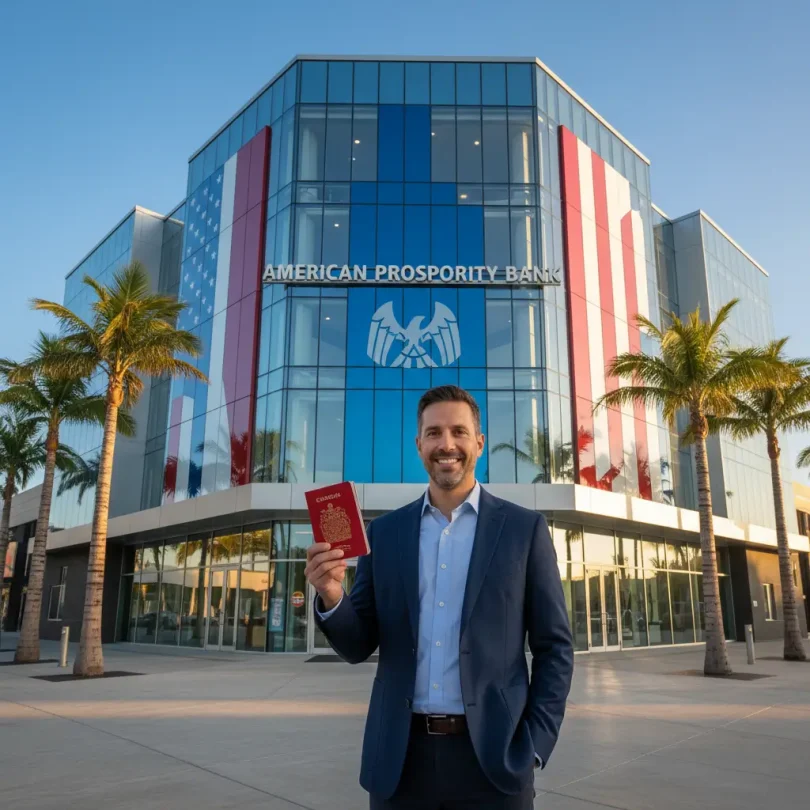

Every year, thousands of Canadians head south for winter vacations, cross-border shopping trips, or real estate investments. Yet many of these frequent travelers continue to use their domestic credit and debit cards for transactions across the border. Every time they swipe their Canadian card in the United States, they typically lose about 2.5% to foreign transaction fees and unfavorable exchange rates. Over a few weeks or months, those hidden costs add up to a significant financial drain.
Opening a United States bank account offers a practical solution to this costly problem. By holding funds directly in US dollars and using an American debit or credit card, you bypass the daily currency conversion fees entirely. Having a local banking presence also simplifies paying American bills, managing a US mortgage, receiving payments from American clients, and building a US credit history.
The process of setting up these accounts has evolved significantly. While it used to require multiple in-person branch visits and endless paperwork, financial institutions have modernized their systems to accommodate non-residents. This comprehensive guide explains exactly how Canadians can open an American bank account, outlining the specific documents you need, the best banking options available, and the tax rules you must follow.
Legal requirements and eligibility for non-residents
You might assume that American financial institutions only serve US citizens or permanent residents, but this is a common misconception. Yes, a Canadian citizen who resides full-time in Canada can legally open a bank account in the United States.
You do not need to hold a green card, have an American work visa, or maintain a permanent residence in the US to become a bank customer. Federal regulations allow foreign nationals to hold checking and savings accounts. However, because of strict anti-money laundering laws and the Patriot Act, banks must verify the identity of every applicant.
One of the biggest hurdles Canadians worry about is the lack of a Social Security Number (SSN) or an Individual Taxpayer Identification Number (ITIN). Fortunately, nearly 42% of banks—especially those accustomed to dealing with Canadians—do not require a US tax ID to open a basic checking or savings account. They will use your Canadian passport and other primary identification to satisfy their legal “Know Your Customer” requirements. However, if you plan to apply for true US credit cards or open interest-bearing accounts that generate significant income, acquiring an ITIN eventually becomes necessary.
Differences between cross-border accounts and true U.S. accounts
Before you begin submitting applications, you need to understand the structural differences between the two main types of accounts available to you.
Cross-border bank accounts
Cross-border accounts are offered by the American subsidiaries of major Canadian banks. Examples include TD Bank (N.A.), RBC Bank USA, and BMO Harris. These institutions have specifically designed their infrastructure to cater to Canadian residents.
The primary advantage here is seamless integration. You can usually view your American checking account and your Canadian checking account on the same online dashboard. Moving money across the border happens quickly, and the application process is highly streamlined because the bank can leverage your existing Canadian banking history. They generally do not require a physical US mailing address or a US credit history.
True U.S. bank accounts
A true US bank account refers to an account held at an American institution with no Canadian parent company, such as Chase, Bank of America, or Citibank.
These accounts are ideal if you want to tap into the lucrative American credit card market to earn travel rewards, or if you need a financial institution with thousands of branches spread across every state. Opening a true US account often requires an in-person visit to an American branch. Furthermore, these institutions are more likely to ask for a valid US mailing address (which can sometimes be a mail forwarding service or a friend’s address) and an ITIN.
Step-by-step guide to opening an account from Canada
Securing your American banking setup requires a bit of planning. Following a structured approach will save you from wasted trips or rejected applications.
1. Determine your core banking needs
Identify exactly why you need the account. If you just need to pay a few American bills and want to transfer money easily from your Canadian funds, a cross-border account through your current Canadian bank is the smartest choice. If you run a business with American clients, you might look into digital-first options. If your goal is acquiring premium US credit cards, aim for a true US account.
2. Choose the right institution
Research the specific monthly fees, minimum balance requirements, and physical branch locations. If you frequent Florida, ensure your chosen bank operates branches there. If you decide on a true US account, call the specific branch you plan to visit ahead of time. Branch employees in border cities or major hubs (like Seattle or Buffalo) handle non-resident applications frequently, whereas employees in smaller inland towns might be entirely unfamiliar with the process.
3. Book an appointment
If you are opening a true US account, do not simply walk into a branch. Use the bank’s online booking tool or call them directly to schedule an appointment with a relationship manager. Explain that you are a Canadian resident looking to open a non-resident account.
4. Attend the appointment and fund the account
Arrive at the branch with all your documentation neatly organized. Be prepared to answer basic questions about your employment and the purpose of the account. You will also need to make an initial deposit. Depending on the institution and the account tier, this required opening deposit generally ranges from $25 to $500 USD.
Required documentation including ID and tax information
Arriving at a bank branch without the proper paperwork guarantees a rejected application. Ensure you have the following documents ready:
Primary and secondary identification
Your Canadian passport serves as your primary identification. It must be valid and unexpired. For secondary identification, bring your Canadian provincial driver’s license or a major credit card (Visa or Mastercard) that bears your name.
Proof of address
Banks need to verify where you live. Bring a recent utility bill (water, gas, or electricity) or a Canadian bank statement showing your name and permanent Canadian residential address.
U.S. mailing address
Many American banks require a US mailing address to send your debit card and official correspondence. Depending on the bank’s strictness, you might use the address of a vacation property you own, a trusted friend or family member’s address, or a commercial mail forwarding service.
Tax documentation (W-8BEN)
To prove you are not a US person for tax purposes, you must complete an IRS Form W-8BEN at the bank. The bank provides this form during the application process. Filling this out ensures that the bank applies the correct tax withholding rules to any interest you earn.
Overview of major banks offering Canadian-friendly services
Several financial institutions stand out for their willingness to work with Canadian residents.
TD Bank
Operating extensively along the East Coast, TD Bank syncs perfectly with TD Canada Trust. Existing Canadian customers can often open a US account remotely or start the process at a Canadian branch. The integration allows for instant cross-border transfers.
RBC Bank USA
Designed exclusively for Canadian residents, RBC Bank USA provides US checking and savings accounts that connect to your Canadian RBC profile. They use your Canadian credit history to approve you for US credit cards, making them an excellent entry point into the American financial system.
BMO Harris
If you bank with the Bank of Montreal, BMO Harris offers integrated cross-border banking. You can manage your funds seamlessly and access thousands of fee-free ATMs across the United States.
Chase
Chase is highly sought after by travel hackers due to its Ultimate Rewards credit card ecosystem. Opening a Chase Total Checking or Chase Savings account usually requires an in-person visit. A checking account generally carries a $12 monthly fee, which they waive if you maintain a $1,500 minimum daily balance.
Bank of America
Popular with Canadian “snowbirds” buying property in the southern states, Bank of America offers the Advantage SafeBalance and Advantage Plus accounts. They frequently require in-person visits and a US mailing address.
Digital-first options (Wise and Mercury)
If you want to avoid branch visits altogether, digital platforms offer compelling alternatives. The Wise Multi-Currency Account allows Canadians to sign up 100% online in minutes. It provides real US routing and account numbers, charges no monthly fees, and issues a debit card. For Canadian businesses operating in the US, Mercury offers fully digital business checking and savings accounts without requiring an SSN or minimum balances.
Managing currency exchange and avoiding high transaction fees
Having a US bank account only solves half the problem; you still need to fund it without losing money to poor exchange rates.
Traditional Canadian banks frequently charge a hidden markup on the exchange rate when you transfer CAD to USD. While the transfer itself might carry no upfront fee, the bank takes a margin on the currency conversion.
To bypass this, savvy Canadians use third-party currency exchange services or platforms like Wise. These services use the mid-market exchange rate and charge a small, transparent, upfront fee. By connecting your Canadian bank account to a service like Wise, and then connecting Wise to your new American bank account, you can move thousands of dollars across the border for a fraction of what traditional banks charge.
Tax implications and reporting requirements for foreign accounts
Holding money in a foreign country introduces specific tax obligations. Failing to meet these reporting requirements can result in severe financial penalties from both the Canada Revenue Agency (CRA) and the Internal Revenue Service (IRS).
Canadian tax obligations
The CRA requires you to report your worldwide income. If your US checking or savings account generates interest, you must convert that USD interest into Canadian dollars and report it on your annual tax return.
Additionally, if the total combined cost of your specified foreign property (which includes funds in US bank accounts, US stocks, and US real estate not used primarily for personal use) exceeds $100,000 CAD at any point during the year, you must file Form T1135 (Foreign Income Verification Statement). The penalties for failing to file this form are steep, reaching up to $2,500 per year.
U.S. tax considerations
On the American side, you must maintain your non-resident status by keeping your W-8BEN form up to date with your bank. This form generally reduces the mandatory IRS withholding tax on interest income from 30% down to 10% under the US-Canada tax treaty.
If the total aggregate value of your US bank accounts exceeds $10,000 USD at any time during the calendar year, you face an additional reporting requirement. You must file a Foreign Bank and Financial Accounts (FBAR) report with the US Treasury’s Financial Crimes Enforcement Network. The deadline typically falls on April 15, with an automatic extension to October 15.
Set yourself up for cross-border success
Opening an American bank account as a Canadian resident is highly achievable. By taking the time to understand the differences between cross-border affiliates and true US banks, you can select the financial product that perfectly matches your lifestyle or business needs.
Use this checklist to ensure a smooth application process:
- Define your primary goal (property management, travel, or business).
- Select a bank that aligns with your specific needs.
- Decide whether an in-person visit or a digital solution works best.
- Gather your valid Canadian passport and a second piece of photo ID.
- Print out recent utility bills to prove your Canadian residential address.
- Secure a US mailing address if required by your chosen institution.
- Call ahead to book an appointment if visiting a physical branch.
- Prepare the required funds for your initial account deposit.
- Mark your calendar to track your FBAR and T1135 tax reporting thresholds.