
College is often seen as a time for academic growth and personal discovery, but it’s also the perfect time to build a strong financial foundation. For many students, managing money for the first time can feel overwhelming. Juggling tuition, living expenses, and a social life on a limited income is a significant challenge. However, learning the principles of wealth management now can set you up for a lifetime of financial security and freedom.
This guide is designed to demystify student finances and provide you with advanced, actionable strategies for economic success. We’ll move beyond basic budgeting and explore how to make your money work for you, even while you’re still in school. You will learn how to manage debt effectively, start investing early, and even explore entrepreneurial ventures. By the end of this post, you’ll have the knowledge and confidence to take control of your financial future and build the life you’ve always envisioned.
Understanding Your Finances: The First Step to Wealth
Before you can build wealth, you need a clear picture of your current financial situation. This means understanding where your money comes from and where it goes.
Creating a Student-Friendly Budget
A budget is the cornerstone of any solid financial plan. It’s not about restricting yourself; it’s about empowering yourself with knowledge.
- Track Your Spending: For one month, record every single expense. Use a notebook, a spreadsheet, or a budgeting app like Mint or YNAB (You Need A Budget). This will reveal your spending habits and highlight areas where you can cut back.
- Categorize Your Expenses: Group your spending into categories like housing, food, transportation, tuition/books, and entertainment. This helps you see where the bulk of your money is going.
- Identify Income Sources: List all your sources of income, including part-time jobs, scholarships, financial aid, allowances, and any side hustles.
- Set Financial Goals: With a clear view of your income and expenses, you can set realistic goals. Whether it’s saving for a spring break trip or building an emergency fund, having a goal makes budgeting more meaningful.
Common Income Sources and Expenses for Students
Income:
- Part-time jobs on or off campus
- Paid internships
- Work-study programs
- Freelance work (e.g., writing, graphic design)
- Scholarships and grants
- Financial support from family
Expenses:
- Tuition and fees
- Textbooks and supplies
- Rent and utilities
- Groceries and dining out
- Transportation (car payments, public transit)
- Personal care and entertainment
Investing Early: The Power of Compound Growth
One of the most powerful tools available to you as a student is time. When you start investing early, you harness the magic of compounding, where your investment returns start earning their own returns.
Why Start Now?
The earlier you begin, the less you need to invest to reach your goals. An investment made at age 20 has decades to grow compared to one made at age 40. This long time horizon also allows you to take on slightly more risk for potentially higher returns, as you have plenty of time to recover from market downturns.
Your First Investment Options
Getting started with investing doesn’t have to be complicated. Here are a few options perfect for student investors:
- Exchange-Traded Funds (ETFs): These are investment funds that hold a diverse mix of assets (like stocks from various companies) and are traded on stock exchanges. They offer instant diversification, which means you’re spreading your risk across many investments. Low-cost ETFs from providers like Vanguard or Fidelity are a great starting point.
- Mutual Funds: Similar to ETFs, mutual funds pool money from many investors to purchase a diversified portfolio of stocks, bonds, or other assets. They are managed by a professional fund manager.
- Stocks: Buying individual stocks means you own a small piece of a company. While potentially rewarding, it’s also riskier than investing in funds. If you go this route, start with companies you know and believe in.
- Robo-advisors: Platforms like Wealthfront and Betterment use algorithms to build and manage a diversified investment portfolio for you based on your goals and risk tolerance. They often have low minimum investment requirements, making them accessible for students.
Smart Debt Management
Many students graduate with some form of debt, most commonly from student loans and credit cards. Managing this debt wisely is critical to your financial health.
Student Loan Strategies
- Understand Your Loans: Know the difference between federal and private loans, your interest rates, and your repayment terms.
- Pay Interest While in School: If you have unsubsidized federal loans or private loans, interest accrues while you’re in school. Making small payments towards the interest can save you a significant amount over the life of the loan.
- Explore Refinancing: After graduation, you might be able to refinance your student loans for a lower interest rate, especially if you have a good credit score. Companies like SoFi and CommonBond specialize in this.
Using Credit Cards Responsibly
A credit card can be a useful tool for building credit, but it can also lead to high-interest debt if misused.
- Pay Your Bill in Full, Every Month: This is the golden rule. It prevents you from paying interest and keeps your debt from spiraling.
- Keep Your Utilization Low: Try to use less than 30% of your available credit limit. This positively impacts your credit score.
- Look for Student Cards: Many cards are designed for students and offer rewards like cash back on purchases.
Building Your Financial Safety Net
Life is unpredictable. A financial safety net ensures that an unexpected event, like a car repair or a temporary loss of income, doesn’t turn into a financial crisis.
The Importance of an Emergency Fund
Your emergency fund is your first line of defense. It’s a pool of money set aside specifically for unexpected expenses.
- How Much to Save: Financial experts recommend saving at least three to six months’ worth of essential living expenses. As a student, even a smaller goal of $500 to $1,000 can make a huge difference.
- Where to Keep It: Store your emergency fund in a separate, high-yield savings account. Banks like Ally or Marcus offer competitive interest rates (also known as APY, or Annual Percentage Yield) and keep the money accessible but separate from your daily checking account.
- Automate Your Savings: Set up automatic transfers from your checking account to your savings account each month. Even $25 a month adds up over time.
The Role of Insurance
Insurance protects you from catastrophic financial loss. As a student, you should consider:
- Health Insurance: Many universities offer student health plans, or you may be able to stay on your parents’ plan until age 26.
- Renters Insurance: If you live off-campus, this protects your personal belongings from theft or damage. It’s surprisingly affordable, often less than $20 a month.
- Car Insurance: If you own a car, this is a legal requirement in most states.
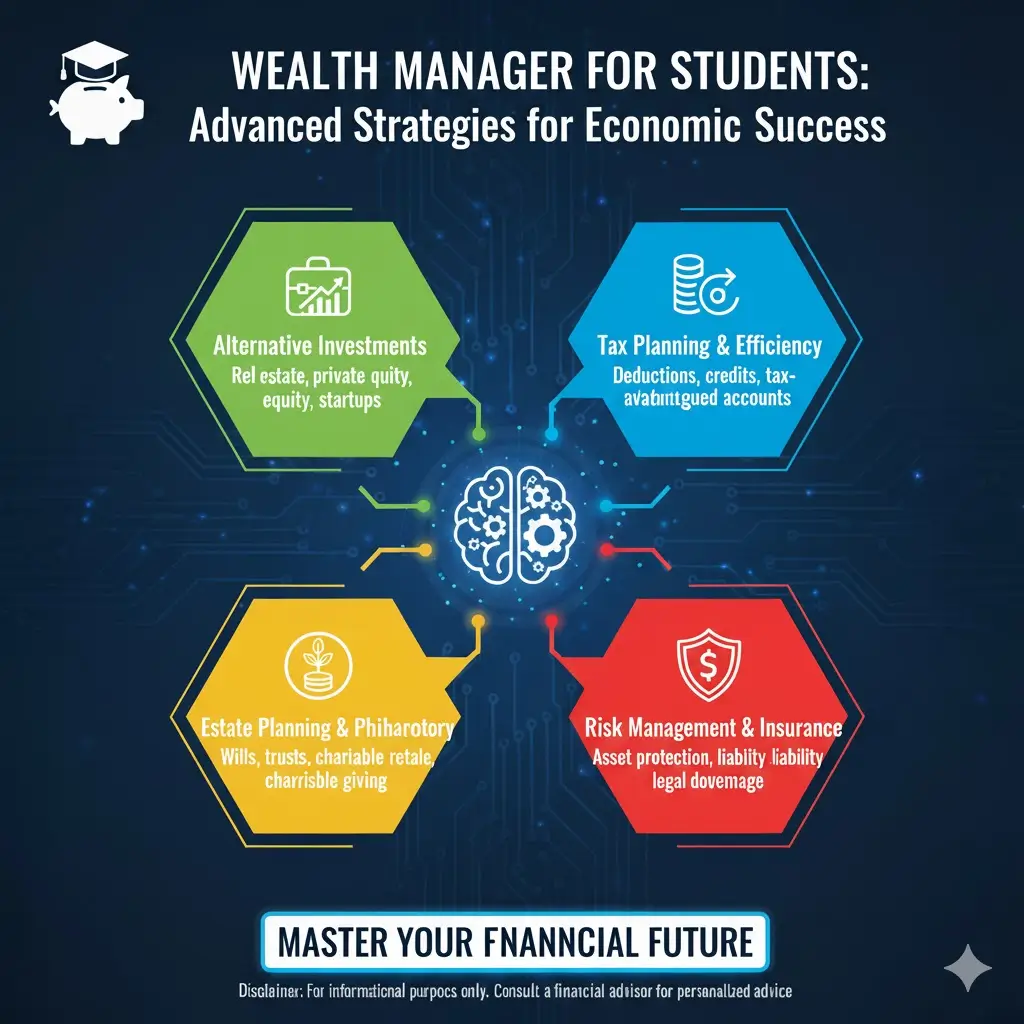
Advanced Strategies for Student Wealth Creation
Once you have the fundamentals down, you can explore more advanced strategies to accelerate your wealth-building journey.
Tax Planning for Students
Taxes might seem complex, but understanding the basics can save you money.
- Education Credits: The American Opportunity Tax Credit and the Lifetime Learning Credit can reduce your tax bill if you, or your parents, are paying for tuition.
- Student Loan Interest Deduction: You can deduct the interest you pay on student loans, up to $2,500 per year.
- Retirement Account Contributions: Contributions to a traditional IRA may be tax-deductible.
- Consult an Advisor: As your financial situation becomes more complex, especially with side hustles, consulting a tax professional can help you maximize deductions and stay compliant.
Side Hustles and Entrepreneurship
The gig economy has opened up countless opportunities for students to earn extra income on their own terms.
- Leverage Your Skills: Are you a great writer, a coding whiz, or a talented artist? Platforms like Upwork and Fiverr connect freelancers with clients.
- Explore Local Gigs: Think pet-sitting, tutoring, or food delivery. These offer flexible hours that can fit around your class schedule.
- Start a Small Business: Have a passion for something? Turn it into a business. Whether it’s selling handmade crafts on Etsy or starting a blog, entrepreneurship is a powerful way to build wealth and skills.
Introduction to Retirement Planning
It might sound premature, but starting to save for retirement in college is one of the smartest financial moves you can make.
- Open a Roth IRA: A Roth IRA is a retirement account where you contribute after-tax dollars. Your investments grow tax-free, and you can withdraw them tax-free in retirement. Because you’re likely in a low tax bracket as a student, a Roth IRA is often a fantastic choice.
- Contribute What You Can: You don’t need to max out your contributions. Starting with just $50 a month can grow into a substantial sum over 40+ years thanks to compounding.
Real-Life Student Success Stories
Theory is great, but seeing how other students have put these strategies into practice can be incredibly motivating.
- Case Study 1: The Emergency Fund Builder
Sarah, a 22-year-old business student, was determined to graduate with a financial cushion. By using the YNAB budgeting app, she identified that she was spending over $200 a month on coffee and lunches. She started making coffee at home and packing her lunch, redirecting that money to a high-yield savings account. Combined with her earnings from a part-time campus job, she successfully saved $5,000 in her emergency fund in two years. - Case Study 2: The Early Investor
Michael, a 24-year-old engineering graduate student, learned about investing from a finance podcast. He opened a Roth IRA and started investing $100 a month into a low-cost S&P 500 ETF. Intrigued by the market, he also opened a brokerage account to invest in a few individual stocks and other mutual funds. Over three years, his portfolio achieved an average annual return of 8%, demonstrating the power of consistent, early investing. - Case Study 3: The Savvy Side Hustler
David, a 29-year-old law student, needed to supplement his income to cover living expenses. A skilled writer, he created a profile on Upwork offering freelance legal writing and editing services. Within six months, he had built a steady client base and was earning an extra $1,500 per month, all while managing his demanding course load.
Your Toolkit for Financial Success
Here are some resources to help you on your wealth management journey:
- Budgeting Apps: Mint, YNAB, PocketGuard
- Investing Platforms: Vanguard, Fidelity, Wealthfront, Betterment
- High-Yield Savings Accounts: Ally Bank, Marcus by Goldman Sachs, Discover Bank
- Financial News & Education: Investopedia, The Wall Street Journal, NerdWallet
- AI-Driven Tools: Leverage cutting-edge software like FinanceCore AI’s wealth management platform to get personalized, data-driven insights tailored to your financial situation.
Take Control of Your Financial Future
Building wealth as a student is not about getting rich quick. It’s about developing smart habits, making informed decisions, and using your greatest asset—time—to your advantage. By creating a budget, investing early, managing debt wisely, and exploring advanced strategies, you are laying the groundwork for a future of financial independence and security.
The journey starts today. Take one small step—whether it’s tracking your spending for a week, opening a savings account, or reading an article about ETFs. Your future self will thank you for it.
Ready to create a personalized financial plan?
- Schedule a free consultation with one of our financial advisors.
- Download our free guide, “5 Steps to Financial Success for Students.”
- Subscribe to our newsletter for weekly wealth management tips.
Legal Disclaimer: The information provided in this blog post is for general informational purposes only and does not constitute professional financial advice. Consult with a qualified financial advisor before making any investment decisions. FinanceCore AI is not responsible for any losses or damages resulting from the use of the information provided. Investment involves risk, including the potential loss of principal. Case studies and examples are for illustrative purposes only and do not guarantee future results. This blog post may contain links to third-party websites; FinanceCore AI is not responsible for their content or privacy practices. All trademarks and copyrighted materials belong to their respective owners.