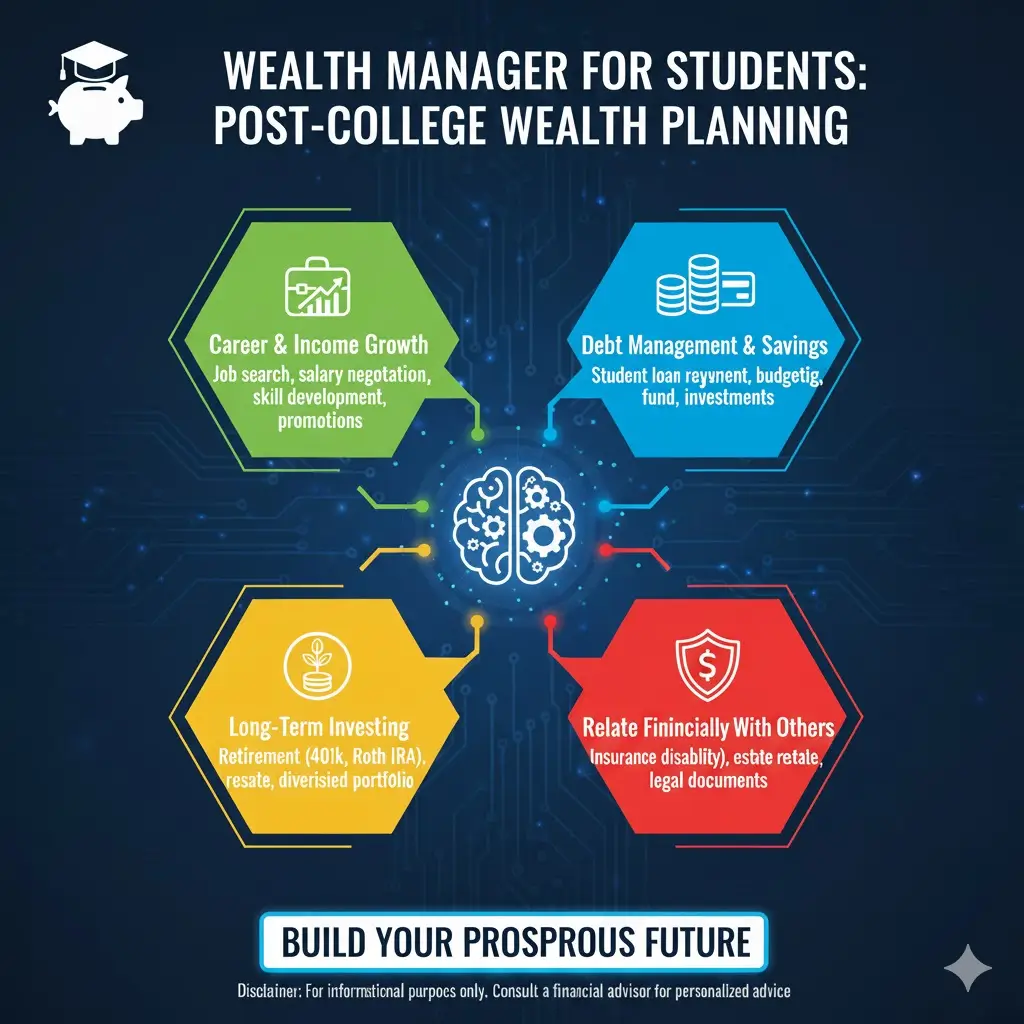

Graduation is a major milestone. You’ve earned your degree, tossed your cap, and now you’re stepping into the professional world. While this is an exciting time, it also comes with new responsibilities, especially when it comes to your finances. For many recent graduates, topics like budgeting, student loans, and investing can feel overwhelming.
This guide is here to change that. We’ll break down the essential components of post-college financial planning into simple, actionable steps. You’ll learn how to create a realistic budget, tackle student loan debt, and start investing for your future, even with a limited income. We’ll also cover the basics of building credit, understanding insurance, and knowing when to seek professional advice. By the end of this post, you’ll have the confidence and knowledge to take control of your financial journey and build a strong foundation for a prosperous future.
First, Create a Budget
A budget is the cornerstone of any solid financial plan. It’s not about restriction; it’s about empowerment. A budget gives you a clear picture of where your money is going, helping you make intentional decisions that align with your goals. Without one, it’s easy to overspend and wonder where your paycheck went.
How to Create a Budget You’ll Actually Use
- Track Your Income: Start by calculating your total monthly take-home pay. This is your salary after taxes, health insurance premiums, and any other deductions.
- List Your Expenses: Track every dollar you spend for a month. Use a budgeting app like Mint or You Need a Budget (YNAB) to make this easier. Categorize your expenses into fixed (rent, car payments, student loans) and variable (groceries, entertainment, shopping).
- Analyze and Adjust: Compare your income to your expenses. Are you spending more than you earn? Look for areas where you can cut back. Even small changes, like brewing coffee at home or canceling unused subscriptions, can make a big difference. The goal is to live within your means and free up cash for savings and debt repayment.
- Set Financial Goals: Your budget should reflect your priorities. Whether you want to pay off debt, save for a down payment, or build an emergency fund, allocating specific amounts in your budget will help you get there.
A common mistake for recent graduates is “lifestyle creep”—increasing your spending as your income grows. While it’s tempting to upgrade your apartment or buy a new car, try to maintain some of your frugal student habits. This will allow you to aggressively save and invest, accelerating your path to financial freedom.
Manage Your Student Loan Debt
For many graduates, student loan debt is the biggest financial hurdle. The average 2021 graduate left school with over $38,000 in loans. It’s a daunting figure, but with a strategic approach, you can manage and eliminate this debt.
First, you need to understand the true cost of your loans. It’s not just the principal amount you borrowed; it’s the total you’ll repay with interest over many years. Log into your loan servicer’s portal and get familiar with your loan details: the total balance, interest rates for each loan, and the repayment terms.
Effective Repayment Strategies
- Debt Snowball Method: This strategy focuses on building momentum. You make the minimum payments on all your loans but put any extra money toward the loan with the smallest balance. Once that loan is paid off, you roll the payment amount over to the next-smallest loan. Sarah, a recent grad with $40,000 in debt, used this method. Paying off her first small loan gave her the motivation to keep going, and she became debt-free in just seven years.
- Debt Avalanche Method: If you want to save the most on interest, this method is for you. You make minimum payments on all loans but direct extra funds to the loan with the highest interest rate. This approach is mathematically the most efficient.
- Refinancing: If you have good credit, you might be able to refinance your student loans. This means a private lender pays off your existing federal and/or private loans and gives you a new loan, ideally with a lower interest rate. Mark refinanced his loans from an 8% interest rate down to 4.5%. This lowered his monthly payments and allowed him to invest the difference, building wealth while still paying off his debt.
- Income-Driven Repayment (IDR) Plans: If you have federal student loans and a low starting salary, an IDR plan can be a lifesaver. Your monthly payment is capped at a percentage of your discretionary income. Emily chose this path, which gave her the financial flexibility to start a side business. As her income grew, so did her payments, and she eventually paid off her loans while building her own company.
Start Investing Early
Retirement might seem decades away, but the single most powerful tool you have on your side is time. Thanks to compound interest, the money you invest today will grow exponentially over the years. Compound interest is when you earn returns not just on your initial investment, but also on the accumulated interest.
Carly started investing at 19 by opening a Roth IRA, a retirement account where contributions are made with after-tax money, meaning your earnings and withdrawals in retirement are tax-free. She started with $1,000 and contributed $100 per month. Assuming an average 8% annual return, by age 65, her $55,000 in total contributions could grow to over $500,000—all of it tax-free.
Your First Investment Options
- Employer-Sponsored Retirement Plans (401(k) or 403(b)): If your employer offers a retirement plan, especially with a matching contribution, take full advantage of it. An employer match is free money. Contribute at least enough to get the full match.
- Roth IRA: If your employer doesn’t offer a plan, or if you want to save more, a Roth IRA is an excellent choice for young professionals. Your contributions grow tax-free, and you won’t owe taxes on withdrawals in retirement.
- Stocks and Bonds: Stocks represent ownership in a company, while bonds are essentially loans you make to a government or corporation. Stocks have higher growth potential but also higher risk. Bonds are generally safer but offer lower returns.
- ETFs (Exchange-Traded Funds): ETFs are a great option for beginners. They are investment funds that hold a diverse collection of assets, like hundreds of stocks or bonds. This diversification helps manage risk. You can buy and sell them on a stock exchange, just like individual stocks.
Beginner-friendly platforms like Acorns, Robinhood, and Fidelity Go make it easy to start investing with small amounts of money. Remember, investing is a long-term game. Focus on building a diversified portfolio and avoid chasing quick, high-risk profits.
Build Good Credit
Your credit score is a three-digit number that lenders use to determine your creditworthiness. A good score can save you thousands of dollars on future loans for a car or a house. Building credit as a young adult is crucial.
- Use a Credit Card Responsibly: If you don’t have one, consider a student credit card or a secured card. Make small purchases and pay the balance in full every month. Never charge more than you can afford to pay off.
- Pay Bills on Time: Your payment history is the most important factor in your credit score. Set up automatic payments for your credit card, student loans, and other bills to ensure you’re never late.
- Keep Your Credit Utilization Low: Aim to use less than 30% of your available credit limit. For example, if your credit limit is $1,000, try to keep your balance below $300.
Understand Your Insurance Needs
Insurance is about protecting yourself from financial disaster. As a recent graduate, there are three main types you should consider:
- Health Insurance: If you’re under 26, you may be able to stay on your parents’ plan. Otherwise, you’ll need to get coverage through your employer or the Health Insurance Marketplace.
- Renters Insurance: This protects your personal belongings in case of theft, fire, or other disasters. It’s surprisingly affordable, often costing less than $20 a month.
- Auto Insurance: If you own a car, auto insurance is legally required. Shop around for the best rates.
When to Seek Professional Advice
While you can manage many aspects of your finances on your own, there are times when a professional can provide invaluable guidance. A wealth manager can help you create a personalized financial plan, navigate complex investment decisions, and optimize your strategy for long-term success.
Consider seeking professional advice if:
- You receive a significant inheritance or financial windfall.
- You want a comprehensive, long-term financial plan.
- You feel overwhelmed and want expert guidance on student loans, investing, or retirement planning.
Look for firms that specialize in working with young professionals and offer a transparent, affordable fee structure. Many offer a free initial consultation to see if their services are a good fit.
Take Control of Your Financial Future
Your post-college years are a time of immense growth, both personally and professionally. By applying the principles in this guide—creating a budget, managing debt, investing early, and protecting yourself with insurance—you can build a strong financial foundation. The journey to wealth isn’t a sprint; it’s a marathon. The small, consistent steps you take today will pave the way for a secure and prosperous future.
Ready to take the next step? Download our comprehensive guide to post-college wealth planning or schedule a free consultation with one of our wealth management experts.