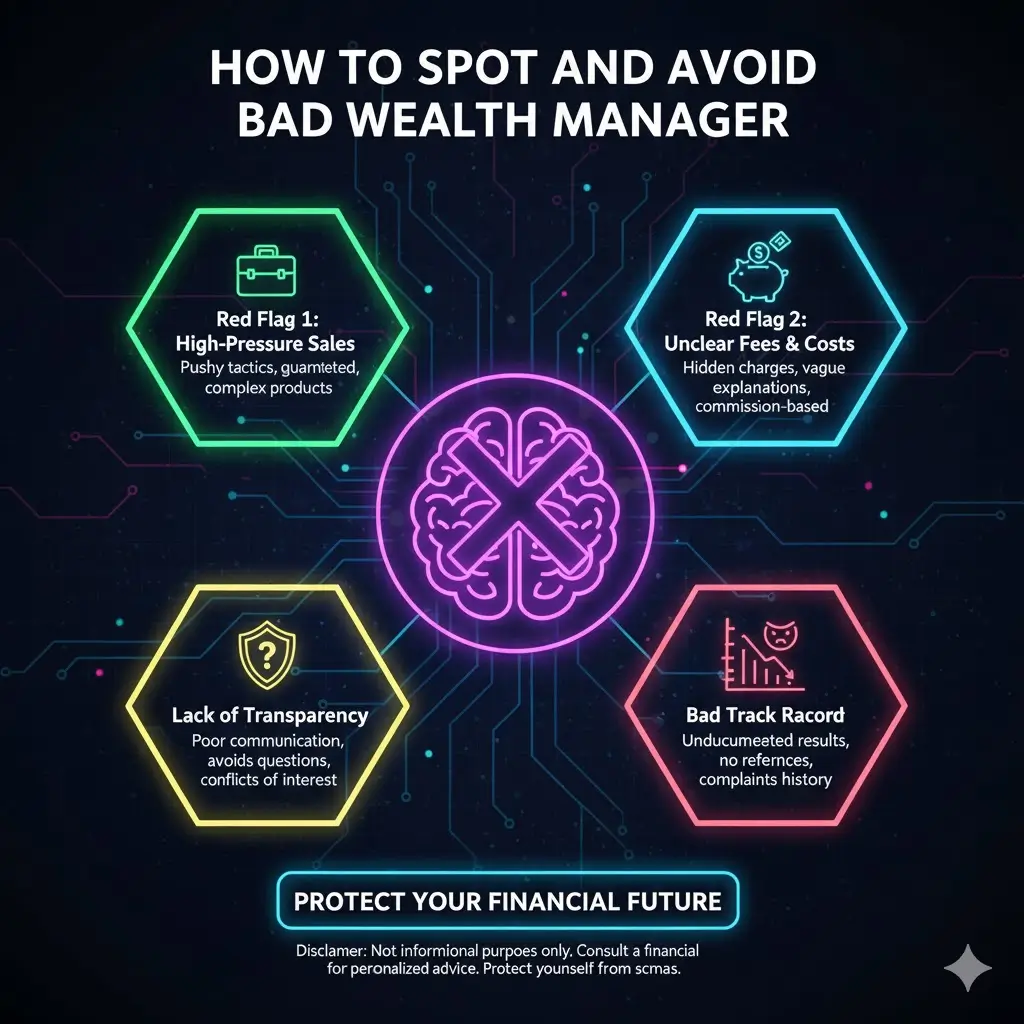

Choosing a wealth manager is one of the most significant financial decisions you will ever make. This individual or firm will be entrusted with your hard-earned money, shaping your financial future and helping you achieve your long-term goals. A great wealth manager can provide invaluable guidance, while a bad one can lead to devastating losses, stress, and shattered dreams.
The good news is that the vast majority of financial advisors are honest professionals dedicated to their clients’ success. However, a small percentage of “bad actors” do exist. Public data suggests that about 7% of advisors in the United States have a negative regulatory event in their past, with roughly half of those having issues so severe they probably shouldn’t be in the industry. That means around 3%, or sixty thousand financial and insurance advisors, are individuals you absolutely want to avoid.
So, how do you protect your wealth from mismanagement, unethical practices, or outright fraud? This guide will walk you through the process of identifying red flags and conducting thorough due diligence. By following these steps, you can confidently select a trustworthy and competent wealth manager who will act in your best interest.
10 Warning Signs of a Bad Wealth Manager
Spotting a bad wealth manager early can save you from significant financial and emotional distress. While some signs are obvious, others are more subtle. Here are ten red flags to watch for when evaluating a potential financial advisor.
1. Lack of Transparency and Communication
A trustworthy wealth manager should be an open book. If an advisor is vague about their investment strategy, avoids answering your questions directly, or uses confusing jargon to obscure information, consider it a major warning sign. You have a right to understand exactly how your money is being managed. Secrecy has no place in a healthy client-advisor relationship.
2. High-Pressure Sales Tactics
Your financial decisions should never feel rushed. An advisor who pressures you to make quick decisions, often using phrases like “this is a limited-time opportunity” or “I can only get you into this investment if you act now,” is likely motivated by their own commission rather than your best interests. This “take-away close” is a classic psychological ploy designed to create a false sense of urgency and exclusivity.
3. Unrealistic Promises and Guarantees
If it sounds too good to be true, it probably is. Be wary of any wealth manager who guarantees high returns or promises risk-free investments. The financial markets are inherently unpredictable, and any legitimate advisor will be upfront about the potential risks associated with any investment strategy. Statements that tout incredible investment performance without discussing risk are a significant red flag.
4. Conflicts of Interest
A financial advisor should always put your interests first. This is known as their fiduciary duty. However, some advisors have conflicts of interest that can compromise their advice. For example, they might receive higher commissions for selling certain products, creating an incentive to recommend investments that benefit them more than you. A good advisor will proactively disclose any potential conflicts of interest.
5. Poor Performance Track Record
While past performance is not a guarantee of future results, a consistent history of underperformance or frequent, costly mistakes is a cause for concern. Ask for performance data and compare it to relevant benchmarks. If the manager consistently fails to meet or beat market averages over the long term, you should question their strategy and expertise.
6. Ignoring Your Risk Tolerance
A crucial part of a wealth manager’s job is to understand your personal risk tolerance and design a portfolio that aligns with it. If an advisor pushes you into aggressive investments that make you uncomfortable or dismisses your concerns about potential losses, they are not respecting your financial goals or emotional comfort. This is your money, and you should feel secure with the level of risk you are taking.
7. Unclear Fee Structure
You should know exactly how much you are paying for wealth management services. A bad advisor may be evasive or unclear about their fees. Whether they charge a percentage of assets under management (AUM), commissions, a flat fee, or an hourly rate, the structure should be simple to understand and clearly documented. If you can’t get a straight answer on fees, walk away.
8. Lack of Credentials and Experience
Proper qualifications are essential in the financial industry. Look for credentials like Certified Financial Planner (CFP), Chartered Financial Analyst (CFA), or Certified Public Accountant (CPA). While a lack of designations isn’t an automatic disqualifier, it does mean you should scrutinize their experience and background more closely. An advisor without a professional website or a verifiable presence on their employer’s site is also a red flag.
9. Negative Reviews and Complaints
In the digital age, it’s easier than ever to find feedback on financial professionals. Look for online reviews, but more importantly, check for formal complaints or disciplinary actions through regulatory bodies. While a single disgruntled client doesn’t necessarily indicate a bad advisor, a pattern of negative feedback or serious regulatory issues is a clear warning.
10. Refusal to Provide References
A confident and successful wealth manager should have a list of long-term clients who are willing to speak about their positive experiences. If an advisor is hesitant or refuses to provide references (while respecting client privacy), it may be because they don’t have many satisfied clients to draw from.
How to Protect Yourself: Due Diligence is Key
Avoiding a bad wealth manager requires proactive research. By taking the following steps, you can significantly increase your odds of finding a trustworthy partner for your financial journey. These steps are listed in order of importance.
Step 1: Verify They Are Licensed
This is the most critical step. The SEC frequently warns that one of the most common frauds involves unlicensed individuals posing as financial advisors. A legitimate advisor must be registered with a regulatory body. You can verify their license using these free tools:
- FINRA BrokerCheck: For brokers and brokerage firms.
- SEC Investment Adviser Public Disclosure (IAPD): For investment advisors and firms.
If you cannot find the person in one of these databases, do not hire them. There are very few exceptions where someone can legally provide investment advice without being registered.
Step 2: Check Their Regulatory Background
Once you’ve found the advisor’s record, look for a section called “Disclosures.” This is where any client complaints, regulatory actions, or legal issues are listed. While the majority of advisors have clean records, a disclosure doesn’t automatically mean they are a “bad” advisor.
However, pay close attention to the nature and frequency of these disclosures. Multiple instances where the advisor had to pay fines to a regulator or compensate a client should be scrutinized heavily. Understand the context, but a pattern of issues is a major warning.
Step 3: Understand the Fee Structure
Ask direct questions about compensation. A good advisor will have no problem explaining their fees clearly.
- “How do you get paid?”
- “Can you provide a full breakdown of all fees associated with my account?”
- “Do you earn commissions on any products you recommend?”
If they are unable to give you specific, clear answers, they are either unethical or not a good fit. For example, if they recommend a life insurance policy, they should be able to tell you the commission they will receive.
Step 4: Ask About Their Investment Philosophy
A good wealth manager should be able to articulate their investment strategy in plain English. Be wary of anyone who claims their model is “proprietary and secret.” While they may have a unique formula, they should be able to explain the principles behind it. Transparency is crucial. Ask questions like:
- “How do you decide which investments to buy or sell?”
- “Who is the custodian of my money?” (The custodian is the firm that holds your assets, like Charles Schwab, Fidelity, or Pershing. You should never write a check directly to your advisor for investments; it should be made out to the custodian firm.)
Step 5: Trust Your Gut
After your research and initial conversations, how do you feel? Sometimes, everything can look perfect on paper, but something still feels off. Do not ignore that intuition. This is a long-term relationship, and you need to have a high level of trust and comfort. If you have any nagging doubts or a bad “gut feeling” after meeting them, it’s best to walk away. There are many qualified advisors to choose from, so there’s no need to settle.
Making an Informed Decision for Your Future
Choosing the right wealth manager is a process that demands diligence, but the peace of mind it brings is priceless. The story of Mark Spangler, a once-celebrated, fee-only fiduciary advisor who was later charged with running a Ponzi scheme, serves as a stark reminder that even advisors who appear trustworthy can go astray. This underscores the importance of not just initial vetting but ongoing vigilance.
By being aware of the red flags and taking the time to thoroughly research potential candidates, you empower yourself to make a confident, informed choice. Your financial future is too important to leave to chance.
If you are ready to partner with a team of transparent, credentialed, and client-focused wealth managers, we are here to help.
Schedule a free, no-obligation consultation with our expert team today to ensure your financial future is in safe hands.