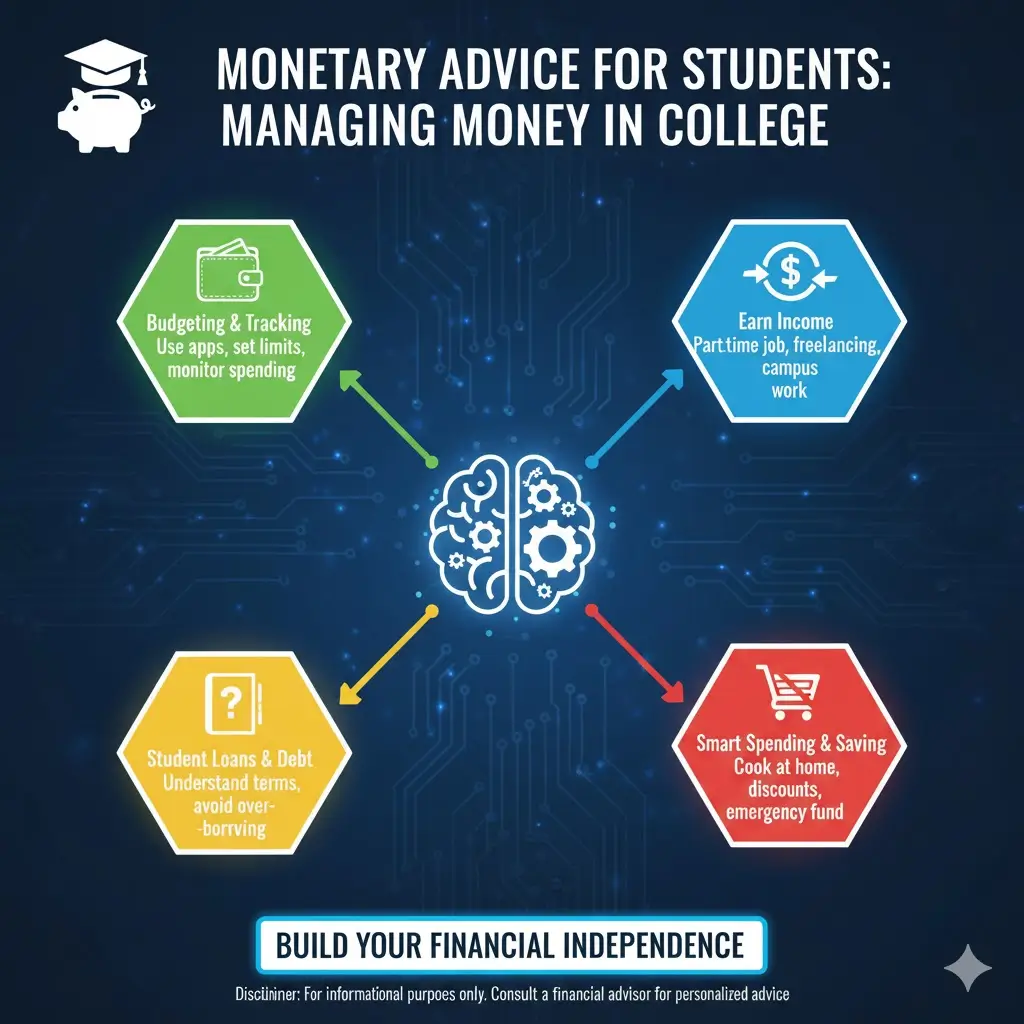

College is often the first time you’re truly on your own, managing not just your schedule but also your finances. Suddenly, you’re faced with tuition payments, textbook costs, and the daily temptation of takeout. It can feel overwhelming, but learning effective money management now sets you up for a lifetime of financial well-being. This guide will walk you through creating a college budget, handling student loans, and making your money work for you, ensuring you graduate with financial confidence.
Learning to manage your money in college is about more than just surviving on a tight budget. It’s about building habits that will help you achieve your future goals, whether that’s paying off student loans quickly, saving for a car, or simply living without financial stress. With the right strategies, you can take control of your finances and make the most of your college years.
Creating Your First College Budget
A budget is simply a plan for your money. It helps you see where your money is coming from and where it’s going, so you can make intentional decisions about your spending. According to a recent study by Sallie Mae, 74% of college students use a budget to manage their expenses, and for good reason—it works.
Step 1: Track Your Income and Expenses
First, figure out how much money you have coming in each month. This could be from a part-time job, financial aid, or help from your family.
Next, track everything you spend for a month. Everything. From your morning coffee to your late-night snacks. This might seem tedious, but it’s the most effective way to understand your spending habits. You can use a simple notebook, a spreadsheet, or a free budgeting app like Mint to make this easier.
Step 2: Categorize Your Spending
Once you have a month’s worth of data, group your expenses into categories like:
- Needs: Tuition, rent, textbooks, groceries, transportation.
- Wants: Dining out, entertainment, shopping, subscriptions.
This helps you see where you might be overspending. Are you spending more on Uber Eats than on groceries? Seeing the numbers in black and white can be a real eye-opener.
Step 3: Set Spending Goals
Now, create your budget. Allocate a specific amount of money to each category. Remember the advice from financial expert Suze Orman: “The key to financial security can be distilled down to one sentence: Spend less than you earn.” If your expenses are higher than your income, look for areas to cut back, starting with your “wants.”
For example, I remember my sophomore year when I realized I was spending nearly $150 a month on coffee shops. It was a social habit, but the cost was adding up. By making coffee at home most days and limiting cafe trips to once a week with friends, I cut that expense by more than half. That extra money went into my savings, which helped me cover an unexpected car repair without having to ask my parents for help.
Navigating Student Loans
Student loans can feel like a huge weight, especially when you see the numbers. A report by the Federal Reserve found that student loan debt in the U.S. has reached over $1.7 trillion. While that statistic is daunting, you can manage your debt effectively with a solid plan.
Understanding Your Loans
Before you accept any loan, make sure you understand its terms. Here are a few key terms to know:
- APR (Annual Percentage Rate): This is the total cost of borrowing money each year, including interest and fees. A lower APR means you’ll pay less over the life of the loan.
- Credit Score: A number representing your creditworthiness. A good credit score can help you qualify for loans with lower interest rates. You can check yours for free on sites like Credit Karma.
Strategies for Minimizing Debt
The best way to manage loan debt is to minimize how much you borrow in the first place.
- Apply for Grants and Scholarships: Unlike loans, these don’t have to be paid back. Spend time searching for scholarships—even small ones add up.
- Consider a Work-Study Program: If you’re eligible, a work-study job can help you earn money for your expenses without taking on more debt.
- Make Payments While in School: If you have subsidized loans, the government pays the interest while you’re in school. For unsubsidized loans, interest starts accruing immediately. If you can, try to pay the interest while you’re still in school to prevent it from being added to your principal balance.
A Real-World Example
Meet Tim, a recent graduate who finished college with $50,000 in student loans. With a 5% interest rate, his monthly payments were around $530, which felt crippling.
Now, imagine if Tim had been proactive. He worked a part-time job in college, earning about $800 a month. By creating a budget, he could have aimed to save just $200 a month. Over four years, that’s $9,600. If he had put that savings toward his loans upon graduation, his total debt would have dropped to $40,400. His monthly payment would then be around $430—a much more manageable $100 less per month. This simple act of saving during college could have saved him thousands in interest over the life of the loan.
Tools like Unbury.me can help you create a debt repayment plan. It shows you how different payment strategies, like paying off the highest interest loan first (the “avalanche” method), can save you money.
Actionable Saving Tips for Students
Living frugally doesn’t mean you have to miss out on the college experience. It’s about being smart with your money.
Cut Costs on Textbooks and Supplies
Textbooks can be a huge expense, but you should never pay full price.
- Rent or Buy Used: Websites like Amazon and Chegg offer used textbooks and rentals for a fraction of the campus bookstore price.
- Wait and See: Don’t buy a textbook before the first week of class. Many times, I waited only to find out the professor provided all the necessary readings online or that the “required” text was barely used. This strategy alone saved me hundreds.
- Share with a Classmate: Split the cost of a textbook with a friend in the same class.
Live Frugally Without Feeling Deprived
- Master Home Cooking: Eating out adds up quickly. Learn a few simple recipes and consider meal prepping for the week.
- Use Student Discounts: Your student ID is a golden ticket. Always ask if there’s a student discount at restaurants, movie theaters, and retail stores.
- Find Free Fun: Colleges are hubs of free entertainment. Look for on-campus concerts, movie nights, and sporting events. Hiking or having a picnic with friends are other great, low-cost options.
An Introduction to Investing
Investing might sound like something for people in suits, but it’s a powerful tool for anyone, even students. The earlier you start, the more you benefit from compound interest—which is when you earn interest not just on your initial investment, but also on the interest you’ve already earned.
As Certified Financial Planner (CFP) John Doe states, “Starting to invest even small amounts in college can lead to significant long-term gains due to the power of compound interest.”
Getting Started with Small Investments
You don’t need a lot of money to start. Apps like Acorns automatically invest your spare change by rounding up your purchases to the nearest dollar. For example, if you buy a coffee for $3.50, Acorns will invest the extra $0.50 for you. It feels small, but it adds up over time.
Basic Investment Concepts
- Diversification: This means not putting all your eggs in one basket. Spreading your investments across different assets (like stocks and bonds) reduces your risk.
- ROI (Return on Investment): This is the profit you make from an investment. It helps you measure how well your investments are performing.
Consider a student, Sarah, who starts investing just $25 a month at age 20. Assuming a 7% average annual return, by the time she’s 30, she will have invested $3,000, but her account will be worth over $4,300. If she leaves that money to grow without adding another cent, it could be worth over $33,000 by the time she’s 60. That’s the magic of starting early.
Avoiding Common Financial Pitfalls
Many students make similar financial mistakes. Being aware of them is the first step to avoiding them.
- Misusing Credit Cards: Credit cards can be great for building credit, but they’re not free money. If you can’t pay off the full balance each month, the high interest rates can quickly lead to debt. Try to use it only for planned expenses that you know you can pay off.
- Not Having an Emergency Fund: Life happens. A flat tire, a broken laptop, or an unexpected medical bill can throw your budget off track. Aim to save at least $500 in a separate savings account for these emergencies.
- Ignoring Financial Aid Opportunities: Don’t assume you won’t qualify for aid. Fill out the FAFSA (Free Application for Federal Student Aid) every year, and constantly look for scholarships.
I once had a friend who maxed out a credit card on a spring break trip. He thought he could pay it off with his summer job, but he only managed to make minimum payments. The interest piled up, and that “fun” trip ended up costing him nearly double the original amount. It was a tough lesson, but it taught him—and everyone he told—to respect credit card debt.
Your Path to Financial Freedom
Managing money in college is a learned skill. It requires discipline, planning, and a willingness to learn from your mistakes. By creating a budget, managing your loans wisely, saving where you can, and even starting to invest, you are building a strong financial foundation. The habits you form now will empower you to reach your financial goals and live a life with less stress and more freedom.
Ready to take control of your finances? Download our free budgeting template to get started. And if you have a great money-saving tip, share it in the comments below!